Tuesday, September 11, 2012

A History of Modeling


A History of Modeling


Fashion Modeling is considered to have originated in the mid-nineteen century in Paris. The first ever fashion model is believed to be Marie Vernet Worth in 1892 who was married to fashion designer Charles Worth.

The trend towards fashion modeling did not seem to increase immensely considering the success of the Worths. This was mainly due to the fact that models in the early 20th century were not seen as respected individuals and were not considered to have an acceptable profession.

However, this view in society began to change in 1924 when Jean Patou selected only American white woman to model his clothes. This use of selectiveness allowed Patou's clients to identify more with his designs but more importantly allowed the model profession to become more socially acceptable in those less politically correct times.

The openings of the first modeling agencies in London and the US shortly after further emphasized the acceptance of modeling as an appropriate job within society. At this time model types were also evolving and it was not just the typical tall and slender models that were being employed.

Fashion designers such as Cristobal Balenciaga were using models that were deemed to be short and stocky. Also, during World War II ordinary looking and cheerful models were used because designers wanted their smiles to enlighten the mood that was present at the time.

Therefore, with all these various types of models being used the modeling industry grew in stature once again.

Models started to develop into super models where they received incredible amounts of money. For example, Lisa Fossagrives, who some people claim as the first ever supermodel, appeared in numerous high fashion magazines throughout the 1930s, 1940s and 1950s.

Janice Dickinson in the 1960s who is more widely respected as the first ever supermodel became the highest paid model, earning $2,000 per day. She was on the cover of several European magazines including Vogue and Cosmopolitan that were also well established fashion magazines.

During the 1960s and the 1970s more and more supermodels became apparent due to their growing popularity with society. Namely – Twiggy (London – born) and Cheryl Tiegs (Minnesota).

The prominence of the supermodel era continued to grow well into the 1980s and 1990s with models such as Claudia Schiffer, Elle Macpherson, Cindy Crawford, Kate Moss and Naomi Campbell. All of these models became the elite in the modeling industry and to some extent still are.

However, at the turn of the 21st century there seems to be a slight decline in the number of high fashion models mainly due to the increased number of pop singers, actresses and other celebrities. Thus, becoming far more popular with the general public and appearing in numerous fashion magazines and advertising campaigns.

In moving into the 21st century it has also become apparent that there are greater opportunities in the modeling industry. For example, there has been a notable increase in the number of hip-hop artists throughout the world. This trend has resulted in many artists requiring hip-hop models to appear in their videos and in their merchandise.

As well as female models, male models are also becoming in demand with models such as the Swedish born – Marcus Schenkenberg. Some writers believe that he was the first ever male supermodel in the world and also the highest paid.

It is also interesting that to be model in the 21st century you do not need to have the ultra slim and slender look that is personified. For instance, if you have an exceptional body part it is possible to only model that one distinguishing feature.

Thus, the future of modeling looks promising for all different types of individuals.
The first person described as a fashion model is believed to be Parisian shopgirl, Marie Vernet Worth. She was a house model in 1853, to her fashion designer husband, Charles Frederick Worth

The Oldest working Runway Fashion Model today is said to be 80yr old  Carmen Dell'Orefice

HAVE A COMMENT OR A QUESTION ABOUT THIS TOPIC?? CLICK THE COMMENT LINK BELOW AND LEAVE US A COMMENT- WE WOULD LOVE TO HEAR FROM YOU!!---------------------------------------------------------

Tuesday, September 4, 2012

THE MALE MODEL MARKET


MALE MODELS


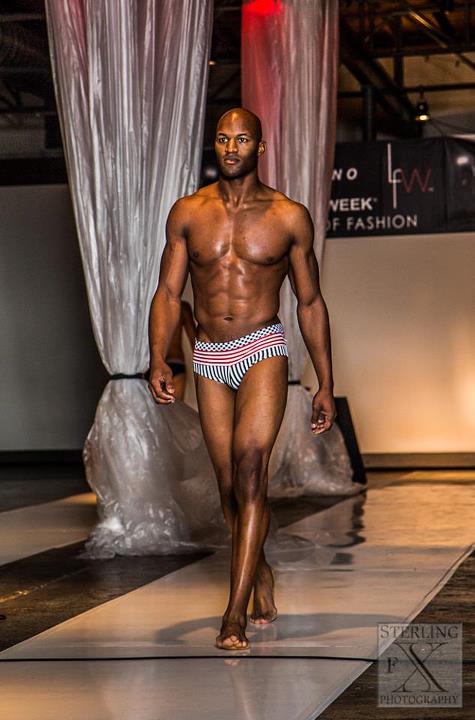
The male model market has exploded due to the rise of models such as Mark Vanderloo, Tyson Beckford and Marcus Schenkenberg, all of whom have become celebrities in their own right.


Male models walk the runway in the major menswear fashion shows twice a year in Milan, Paris, New York, and London. They appear in shows for major men’s designers including Giorgio Armani, Gucci, Prada, Ralph Lauren, and Calvin Klein. They also appear in men’s magazines, such as GQ, Esquire, and Details in the United States, Uomo Vogue in Italy, Vogue Homme in Paris, and Arena in London.
Male Models must be tall, generally at least six feet. “There are exceptions to the rule, but between six feet and 6’2” is the rule. Basically they need to be able to fit into a size 40- regular to a 42-long jacket. Of course, classic , good looking guys are never going out of style . Those are the money makers but there is now a whole breed of funky-looking   guys.


In New York, IMG is the biggest agency that handles men. Other agencies include Wilhelmina, Ford, Major, ID, and Boss and Models. It usually takes longer for men to launch their careers, because there’s not the amount of work that there is for women. In smaller markets, agencies generally will have a men’s division.
In general, there aren’t open calls and model searches for male models looking for agents. To find an agent an aspiring male model’s best bet is to send photos of himself to agencies that handle male models in the city where he wants to work.


Our guest today will be Page Parkes Male model
                  Kenny Gardner


Kenny will be discussing his 9 months in working with runway shows, commercials, internet ads, and catalog work for Latino Fashion Week, Hagar, Academy Sports, Omni Hotel,  JC Penney’s and a Michael Jordan that aired during the Olympics.  He is currently working on a short film to also advance his acting career


Today's guest will also be Sebastian Model Management model
                                  Mr. Brian Smith 


Discussing his overseas experiences, runway fashion shows  and working with several management companies in the Dallas area.

HAVE A COMMENT OR A QUESTION ABOUT THIS TOPIC?? CLICK THE COMMENT LINK BELOW AND LEAVE US A COMMENT- WE WOULD LOVE TO HEAR FROM YOU!!----------------------------------------------------------

Tuesday, August 28, 2012

GO AND SEES: ITS ALL ABOUT PREPARATION


GO AND SEES: - ITS ALL ABOUT PREPARATION

One of the most important aspects of go and sees is for clients to see you up close and personal. 

Although a model may have a book full of wonderful test shots, clients want to know what she’s like in person, what makes her stand out from the pack? Sometimes models photograph different from how they look in person due to the lighting, the makeup, the pose, or just some intangible quality that makes them photogenic.


Casting is another word for go and sees. 
In America, castings usually refer to a go and see for a TV commercial. In Europe, the term is used more often for all types of go and sees.

During a go and see, clients are looking for a model’s unique, individual qualities: Is she/him at ease with strangers? Do unfamiliar situations totally freak you out? How do you make people feel when you are around them?  Are you fun and bubbly, sexy and sultry, or quiet and moody?
I won’t sugarcoat it: Go and sees can be a draining, depressing experience. You are constantly feeling tense and fearful. On top of all that, you know in advance that your chances of being rejected are high.


Despite all these obstacles, the most important thing is to stay cheerful, always be yourself, and let your natural personality shine through, because every client is looking for something unique and individual in each model.

HAVE A COMMENT OR A QUESTION ABOUT THIS TOPIC?? CLICK THE COMMENT LINK BELOW AND LEAVE US A COMMENT- WE WOULD LOVE TO HEAR FROM YOU!!

Tuesday, August 14, 2012

EDITORIAL MODELING- WHAT IT MEANS TO YOUR CAREER


Editorial Modeling


Editorial work includes fashion spreads, which are photos that are “spread” across two pages of the magazine. These types of stories often showcase the latest style trends. The other major type of editorial story is beauty-related, which means anything having to do with skin care, hair care, makeup, or cosmetic procedures, such as facials and massages.
Editorial work is done primarily by big-time models in the fashion capitals (New York , Paris, and Milan) because that’s where the majority of magazines  are based. Models in secondary markets (Chicago, Miami, and Los Angeles) may appear in magazines that are headquartered in those cities, but it is unlikely they would be hired to appear in a well known magazine in a fashion capital. Editorial work for models in local markets is even more limited, because there are so few  magazines located in those cities. Your agent is your best source for finding opportunities for editorial modeling outside the fashion capitals.


Even in the fashion capitals, it’s only a lucky few models who will ever appear in a magazine. Editorial work is the big prize for a model, the most prestigious assignment she can get.

WHY WOULD EDITORIAL BE IMPORTANT FOR YOU CAREER?

Being a successful editorial model will benefit all aspects of a model’s career. If a model is featured on the covers and in the pages of numerous magazines, her career is made. She will be able to demand the highest day rates and enjoy the incredible perks that go with a high –flying modeling career, including great travel opportunities( all –expenses paid trips to fabulous locations, where she’ll stay in the best hotels and eat at the best restaurants. And invitations to the coolest parties and gala events).


Disadvantages

Although overall, the advantages of editorial modeling  far outweigh the disadvantages, there are a few cons to doing lots of editorial. The main disadvantage is that it doesn’t pay well.  (You probably can’t pay your rent if you’re just doing editorial – the day rate averages $200, even for covers.)  For many who live on your own in a fashion capital and are responsible for paying everything from rent to light bulbs, $200.00 is not a lot of money, even if you work every day.  

Tuesday, August 7, 2012

PARTS MODELS


A “Part” model is a model who specializes in modeling certain body parts such as the legs, feet, hands, or back-basically any part of the body, but rarely the face. Parts models can be hired to do a variety of work-editorial work, advertising, TV commercials, catalogs, even films. Parts models generally don’t meet the requirements to be fashion models- maybe they’re not tall enough or don’t have the right look- but they have at least one standout part, such as beautiful hands, gorgeous legs, or perfect feet.
Aside from having the physical qualifications of a great part, an aspiring parts model needs to have plenty of patience and the ability to keep her part still while photographers adjust lights, backdrops, and props to get ready to shoot.


Parts models generally get started a little older than regular models; between the ages of 18 and 20 is common. As long as your part stays beautiful, you could model for up to  25 years or more is common. The work can be very intense and tedious, yet it can be a long, lucrative career for someone with fantastic legs, stand out feet, or lovely hands.


Tuesday, July 24, 2012


BEHIND THE SCENES WITH THE CREATIVE TEAM

The Professionals at a shoot of runway show consist of the client, the photographer, the hairstylist, the makeup artist, and the fashion stylist. At all times, you need to remember as a model that you’re there so these people can create an image with you. Your physical self is a canvas that they’ll be using to create the illusion that is needed for the particulars look or photograph.
No matter how it is sugarcoated or what grand illusion you’ve been told, the truth is that you are a product and ultimately your personal likes and dislikes about hair, makeup, and clothes don’t matter.


The Hairstylist

On most shoots, your hair is done first, before your makeup is done or the fashion stylist gets you dressed. The hairstylist also comes with you onto the set to make sure your hair always looks its best.
When you sit down in the hairstylist’s chair, know that first and foremost. You
are working with an artist. Be respectful of the fact that they came up with this creation with the photographer and the client.


The Makeup Artist

After the hairstylist has finished with your hair, the makeup artist will apply your makeup. If different makeup looks are required for subsequent photos, the makeup artist will redo the makeup each time.
Even if the basic look doesn’t change. The makeup artist checks your face before every picture or look to make sure your makeup looks fresh and beautiful.
She also watches you as you work on the set. And if touchups are needed, she will blot your skin or apply some powder.


The Fashion Stylist
The fashion stylist is in charge of all the clothes that will be used in the photos. His job may include visiting all the clothing designers, showrooms and selecting the clothing, shoes, and accessories that will be used for the shoot or show.
Even though the garment may not appeal to your personal taste,any negative remarks about the clothing or outright refusal to wear something reflects very badly on you. Remember it is not your job as a model to like the look, it’s your job to wear them so don’t complain about what you have to wear.

Tuesday, July 3, 2012

FASHION STYLIST - WHAT DO THEY REALLY DO??

Celebrity Stylist Maly Siharath 


Ms Siharath workes on celebrity styling, editorial styling, ad campaigns and fashion shows. Some of the celebrities she has styled are Natasha Marin, Kenya Jones, Olivia Holt, Yvette Gonzales-Nacer , Bella Thorne, Monica Danger , Brittany Binger, Jenna Jameson, Kenton Duty, Branden Meyer,Kelli Berglund,Katerine Mcnamara, Sundai love, Patrice Fisher, and Miss California 2012 Natalie Pack.


Her work is seen in publications such as Coast, Quatro, Mami, 50Fifty Gold Special Collector Edition, 1968 magazine, Dope 310, Glady,Thirteen Minutes, Leux, PopStar, Defy, M magazine and Vogue Italia.


Ms. LaCrystal Stylezz
 
LaCrystal is a wardrobe stylist in the Dallas area!
LaCrystal is also a personal shopper.She styles men and women's wardrobes for everyday, office, and evening events!
She also gives free consultations of the latest fashion trends, and colors. In the consultation she goes over the right clothes for your body type! Her job is to make you look great and stand out!

Email  LaCrystal at lparker6@twu.edu.
LIKE her ON FACE BOOK! :)